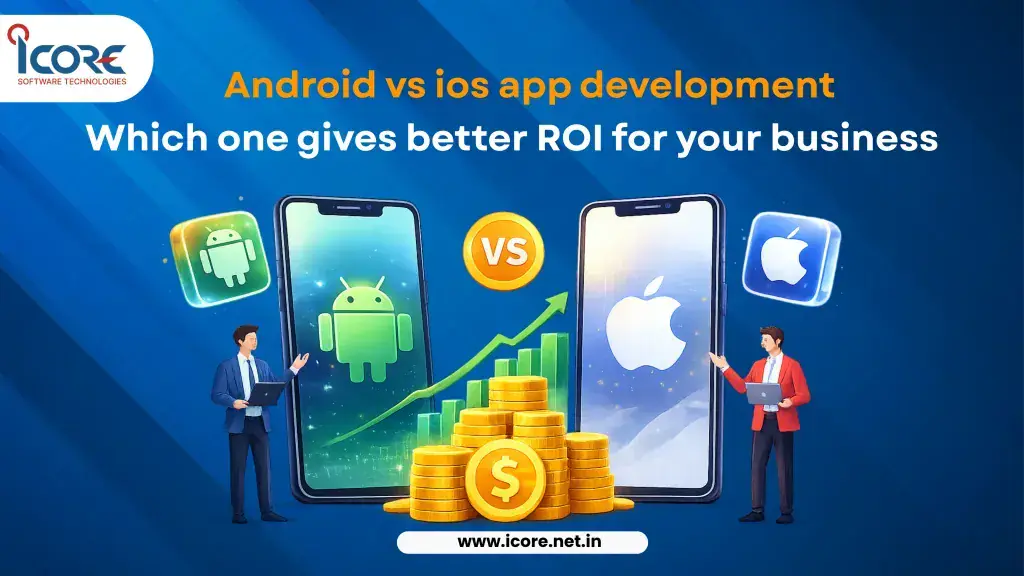
Android vs iOS App Development: Which One Gives Better ROI for Your Business?
Related Insights

Key Takeaways
- •Android holds roughly 92-97% of India's mobile market.
- •iOS users spend nearly 5x more per user on apps than Android users on average.
- •An India-first consumer app almost always needs deep Android coverage.
- •Premium, subscription, or international apps may see better revenue per user on iOS.
- •Cross-platform frameworks let most businesses launch on both without doubling build cost.
Android vs iOS App Development: Which One Gives Better ROI for Your Business?
Android holds roughly 92-97% of India's mobile market, yet iOS users spend nearly 5 times more per user on apps globally — average annual app spend runs around ₹6,300 ($76) per iOS user versus ₹1,330 ($16) per Android user. That gap between reach and revenue is exactly why "which platform first" isn't a simple question — the right answer depends entirely on what your app actually needs to achieve. ICore handles both Android app development and iOS for businesses in Coimbatore.
Key Takeaways
- Android holds roughly 92-97% of India's mobile market specifically, though globally Android sits at about 68% versus iOS at 32%.
- Despite lower market share, iOS users spend nearly 5x more per user on apps than Android users on average.
- An India-first consumer app almost always needs deep Android coverage to reach the bulk of the market.
- A premium, subscription, or high-ticket app targeting affluent or international users may see disproportionately better revenue per user on iOS.
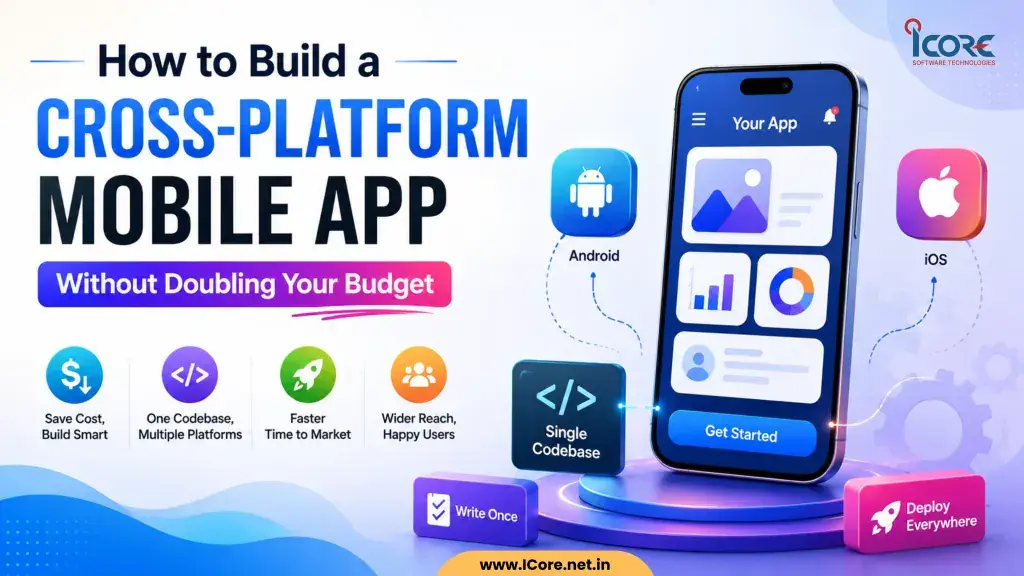
- Cross-platform frameworks (Flutter, React Native) let most businesses launch on both simultaneously without doubling the build cost.
What This Comparison Actually Means
Choosing Android, iOS, or both isn't really about which platform is "better" — it's about matching platform investment to where your actual target customers are and how they spend. A mass-market India consumer app and a premium B2B SaaS tool selling to global enterprise buyers have completely different right answers to this question, even though both are "mobile apps."
What It Looks Like When It's Working
Scenario: A Coimbatore-based grocery delivery startup launched Android-only first, reasoning correctly that their target customers — local households across income segments — were overwhelmingly on Android given India's 92%+ market share. They reached 50,000 downloads in four months with zero iOS investment, then added an iOS version only once they'd validated product-market fit and had budget to spare.
Contrast that with a Coimbatore-based B2B software company selling a premium analytics tool to enterprise clients across India and abroad — they built cross-platform from day one using Flutter, since their buyer base skewed toward decision-makers more likely to carry iPhones, and the higher per-user spend on iOS justified the platform investment despite its smaller reach.
How to Choose Between Android and iOS Development
Step 1: Identify your actual target audience's device usage
A mass-market India consumer app should default to Android-first given the 92-97% local market share. A premium, international, or enterprise-focused app should weigh iOS more heavily given its higher revenue per user.
Step 2: Consider your monetization model
Subscription and in-app purchase-heavy apps often see stronger unit economics on iOS due to higher average spend per user; ad-supported or high-volume apps benefit more from Android's sheer reach.
Step 3: Evaluate cross-platform frameworks first
Unless you need deep, platform-specific native performance (heavy graphics, AR, intensive camera processing), Flutter or React Native lets you launch on both platforms from a single codebase, sidestepping the either-or decision entirely for most business apps.
Step 4: Start with an MVP on your primary platform
Validate product-market fit on whichever platform matches your core audience before expanding — adding the second platform later, once you have real usage data, is far less risky than building both simultaneously without validation.
Step 5: Budget for platform-specific costs
iOS development requires Apple's annual developer fee and generally stricter app review; Android has a one-time developer fee and more device fragmentation to test against — factor both into your realistic budget and timeline.
Common Challenges and How to Overcome Them
"We built for both platforms and neither is performing well."
This often means the resources were spread too thin rather than genuinely optimized for whichever platform your best customers actually use — audit usage data and consider focusing investment on the stronger-performing platform.
"Our Android app has far more downloads but iOS generates more revenue."
This is the expected pattern given the roughly 5x per-user spending gap — it doesn't mean Android is failing, it means the two platforms play different roles in your overall business, both worth keeping.
"We're not sure cross-platform tools are good enough for our needs."
For the vast majority of business apps — bookings, e-commerce, content, service platforms — cross-platform frameworks deliver a genuinely comparable user experience at meaningfully lower cost than separate native builds.
Where Smaller Businesses Have an Advantage
- Smaller teams can validate on one platform quickly and pivot based on real usage data, without the sunk cost of a simultaneous dual-platform launch.
- Cross-platform frameworks let a smaller budget still reach both audiences credibly, closing much of the gap against larger, better-funded competitors.
How Platform Choice Connects with Other Decisions
Platform strategy ties directly into your monetization model, your marketing channel mix (App Store Optimization differs meaningfully between the two stores), and your overall budget — a decision made in isolation from these often needs costly correction later.
Best Practices for Platform Selection
- Match platform priority to where your actual target audience spends time and money, not a generic industry default.
- Default to cross-platform frameworks unless you have a specific, justified reason for native-only development.
- Validate on your primary platform before committing to a simultaneous dual-platform build.
- Budget for the genuinely different review processes and fee structures of each store.
- Revisit platform allocation periodically as your user base and revenue data mature.
FAQs
Should an India-focused app launch on Android or iOS first?
Android, in almost all cases, given its roughly 92-97% share of the Indian mobile market — unless your specific target audience is unusually iOS-skewed.
Is iOS worth the investment given its smaller market share?
Often yes for premium, subscription, or international-facing apps, given iOS users spend nearly 5x more per user on average.
Is cross-platform development good enough for a serious business app?
For most business use cases, yes — Flutter and React Native deliver comparable experiences to native at meaningfully lower cost, reserving native-only development for genuinely performance-intensive apps.
How much more does building for both platforms cost?
Separate native builds can cost 60-80% more than a single cross-platform build covering both; cross-platform frameworks close most of that gap.
Conclusion
Android vs iOS isn't a competition with one universal winner — it's a question of matching platform investment to your specific audience and monetization model. For most India-focused businesses, that means Android-first reach paired with a strategic iOS presence where the higher spend per user justifies it, ideally built on a cross-platform foundation that doesn't force an early either-or decision.
If you're deciding on platform strategy for your next app, get in touch for a straightforward review.
Planning an app? ICore is a mobile app development company in Coimbatore building native, hybrid and cross-platform apps for Android and iOS, from ₹3 lakh.
Share it with your colleagues and social network.