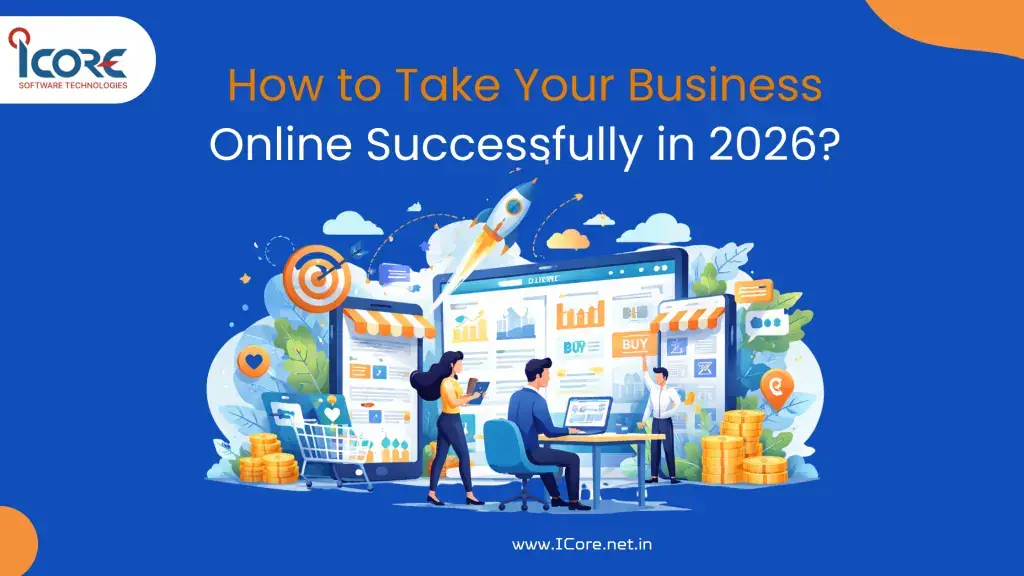
How to Take Your Business Online Successfully in 2026
Related Insights
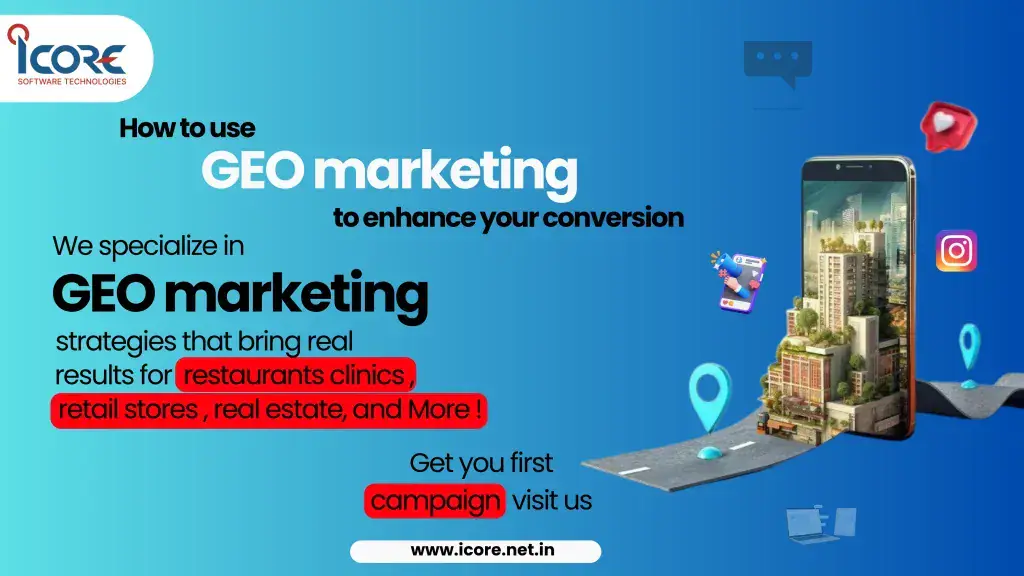
How to Use Geo Marketing to Enhance Your Conversions
9 Mistakes Small Brands Make with Facebook Ads
Key Takeaways
- •98% of consumers now search online for nearby companies before contacting or visiting them, up from 90% in 2019, per BrightLocal's ongoing local search research.
- •76% of "near me" mobile searches lead to a store visit within 24 hours, meaning local search intent converts into real-world footfall quickly.
- •60% of new online shoppers being added to the Indian market currently come from Tier 2 and Tier 3 cities, not metro India.
- •97% of consumers read reviews before choosing a local business, making review management as important as the website itself.
- •Mobile devices account for roughly 82% of e-commerce transactions in India, meaning a business's online presence lives or dies on how it performs on a phone screen.
- •Gen Z now makes up 40-45% of India's online shoppers and drives close to half of new order volume, a customer base that expects a digital-first experience by default.
How to Take Your Business Online Successfully in 2026
India crossed roughly 840 million internet users in 2026, with mobile internet penetration reaching around 62% of the population, according to current industry tracking of the country's digital growth. What's more telling for a local business owner is where that growth is coming from: nearly 60% of all new online shoppers being added to the Indian market right now are from Tier 2 and Tier 3 cities, not the metros everyone assumes are "already online."
That statistic matters if you run a business in Coimbatore and still think of "going online" as optional, or as something only e-commerce brands need. The customers researching you before they ever call or walk in are already online, whether or not you are. This is a practical walkthrough of what taking a business online actually means in 2026 — not a listicle of apps to download, but the sequence that determines whether the effort pays off or quietly fizzles.
Key Takeaways
- 98% of consumers now search online for nearby companies before contacting or visiting them, up from 90% in 2019, per BrightLocal's ongoing local search research.
- 76% of "near me" mobile searches lead to a store visit within 24 hours, meaning local search intent converts into real-world footfall quickly.
- 60% of new online shoppers being added to the Indian market currently come from Tier 2 and Tier 3 cities, not metro India.
- 97% of consumers read reviews before choosing a local business, making review management as important as the website itself.
- Mobile devices account for roughly 82% of e-commerce transactions in India, meaning a business's online presence lives or dies on how it performs on a phone screen.
- Gen Z now makes up 40-45% of India's online shoppers and drives close to half of new order volume, a customer base that expects a digital-first experience by default.
What "Taking Your Business Online" Actually Means
Taking a business online isn't one action, it's a stack of four separate things that each do a different job: being findable (search and maps), being credible once found (a website and reviews), being reachable (a way to message, call, or order), and being trackable (knowing which of those channels actually brings in business). Most businesses that feel like "going online didn't work" only ever did one of these four, usually the website, and skipped the other three.
For a Coimbatore business with an existing offline reputation, the goal isn't to become a pure e-commerce brand overnight. It's closing the gap between how good your business already is in person and how invisible it currently is to someone typing your category into Google at 9pm.
What It Looks Like When It's Working
Scenario: A well-regarded Coimbatore tailoring and bridal wear boutique had operated for 14 years purely on word of mouth and a WhatsApp number shared between customers. They had no Google Business listing, no website, and no way for someone outside their existing circle to find them. A search for "bridal wear Coimbatore" surfaced five competitors and none of their own reputation.
Over three months, they set up a verified Google Business Profile with real photos and pricing ranges, launched a simple ₹45,000 website with a WhatsApp-based enquiry button, and started asking happy customers for reviews at pickup. Within five months they had crossed 80 Google reviews, were appearing in the local "near me" map pack for their core search terms, and were tracking roughly 18 new enquiries a month directly attributable to Google rather than referrals — on a business that previously had zero digital enquiry volume to measure at all.
How to Take Your Business Online, Step by Step
1. Claim and fully complete your Google Business Profile first
Given that 98% of consumers search online for nearby businesses before engaging with them, an incomplete or unclaimed Google listing is very likely the single biggest gap between your real reputation and what a stranger sees when they search your name.
2. Build a website that answers the three questions people actually have
What do you offer, what does it roughly cost, and how do I contact you — a website that clearly answers those three questions on the homepage will outperform a visually elaborate one that buries them, especially since a large share of visitors are deciding within seconds whether to stay.
3. Design for mobile first, not as an afterthought
With roughly 82% of e-commerce activity in India happening on mobile devices, a site that's hard to read, tap, or navigate on a phone is turning away the clear majority of the audience it's meant to attract, regardless of how it looks on a desktop.
4. Set up at least one direct contact channel that matches how customers already behave
For most Coimbatore businesses that's WhatsApp, not a contact form nobody fills out — making it a single tap from your Google listing and website removes the friction between someone being interested and someone actually reaching out.
5. Actively collect reviews instead of hoping they show up
Since 97% of consumers read reviews before choosing a local business, a short, specific ask at the moment of a happy customer interaction (in person, over WhatsApp, at pickup) consistently outperforms a generic "please review us" message sent later.
6. Track where enquiries actually come from
Use a simple system — even a shared spreadsheet where staff log "how did you hear about us" — because without this, it's impossible to tell whether the website, the Google listing, or word of mouth is actually driving results, and you'll end up guessing where to invest next.
7. Keep pricing and availability information current
Outdated hours, prices, or stock information online damages trust faster than having no information at all, since a customer who finds a mismatch between what's listed and what's real is unlikely to give a second chance.
Common Challenges and How to Overcome Them
"We tried a website years ago and it didn't bring in business."
A website alone rarely does. Without a completed Google Business Profile, active review collection, and a working contact channel around it, a website is invisible to the exact local searches described above — the fix is usually the missing pieces, not a redesign.
"We don't have the budget for a big digital push."
You don't need one to start. A properly completed Google Business Profile costs nothing, and a focused, mobile-first website with one clear contact path costs a fraction of a broad e-commerce build — sequencing matters more than budget size here.
"We're not sure our older customers are even online."
The data increasingly says otherwise; a large and fast-growing share of new online shoppers nationally are coming from smaller cities and non-metro India, not just younger, urban demographics, so this assumption is worth testing rather than assuming.
Where Coimbatore Businesses Have an Advantage
- Coimbatore's genuinely strong word-of-mouth culture means most local businesses already have the raw material — real satisfied customers — that review-driven local search rewards; the missing step is usually just asking.
- Lower advertising costs in a Tier 2 market mean a modest, well-targeted local search and social budget goes further here than in a saturated metro market.
- Being part of the wave of Tier 2/3 cities driving new online shopper growth means less established digital competition in many local categories right now, compared to Chennai or Bangalore.
How Taking Your Business Online Connects with Other Business Strategies
Getting online successfully sets up everything that comes after it — the same Google Business Profile and website that make you findable are also the foundation for local SEO and Maps ranking, and once you have a working contact channel and review flow in place, running paid ads or building a mobile app becomes a matter of adding volume to a system that already works, rather than building the whole thing from scratch under pressure.
Best Practices for Taking Your Business Online
- Sequence the work: Google Business Profile and reviews first, then a mobile-first website, then paid promotion.
- Make WhatsApp or a phone number the primary contact method if that's how your customers already prefer to reach you.
- Ask every satisfied customer for a review at the moment of a positive interaction, not weeks later.
- Keep online pricing, hours, and stock information accurate and updated at least monthly.
- Track enquiry sources from day one so future investment decisions are based on data, not guesswork.
FAQs
Do we need a website if we already have a Google Business Profile?
Yes — a Google listing gets you found, but a website is what builds enough trust and detail to convert that discovery into an actual enquiry, especially for higher-value purchases.
Is social media enough to "be online" without a website?
Social media is useful for visibility and engagement, but it doesn't show up reliably in search results the way a website and Google Business Profile do, so relying on it alone leaves the biggest source of local search traffic untouched.
How long does it typically take to see results after going online?
Google Business Profile improvements can show up within weeks; a new website earning trust and search visibility usually takes a few months of consistent activity, reviews, and content before enquiry volume becomes noticeable.
What's the very first thing we should do if we're starting from zero?
Claim and fully complete your Google Business Profile before anything else — it's free, it's what nearly every local customer checks first, and it gives you a clear baseline to measure everything you build after it against.
Conclusion
Taking a business online in 2026 isn't about chasing every platform at once. It's about closing the specific gap between the reputation you've already earned offline and what a stranger finds when they search for you at the exact moment they're ready to buy. Get the sequence right — findable, credible, reachable, trackable — and the rest tends to follow.
If you're not sure where your business currently stands online, or you've tried pieces of this before without a clear result, get in touch for a straightforward review of what's working, what's missing, and what to fix first.
Share it with your colleagues and social network.