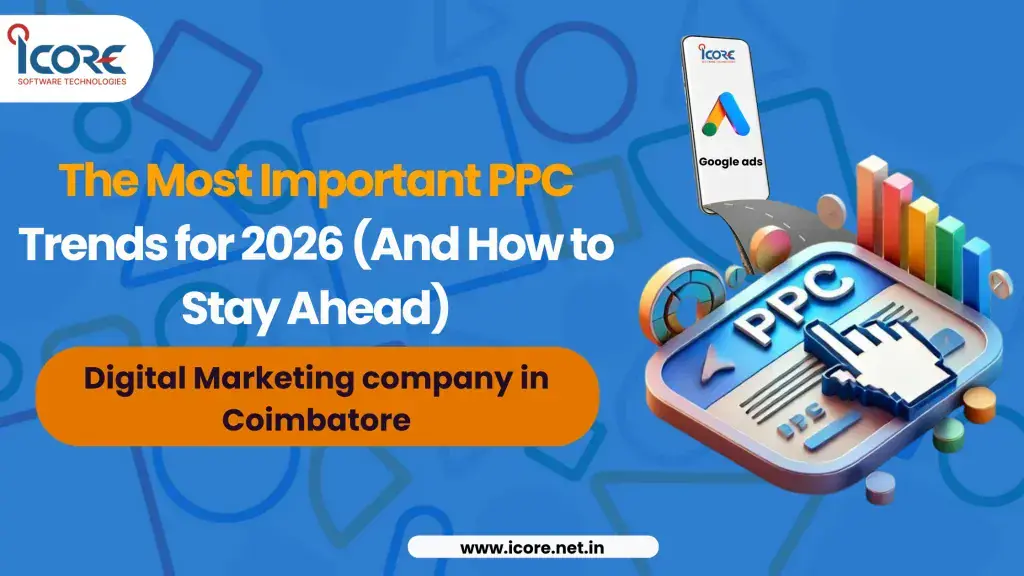
The Most Important PPC Trends for 2026 (And How to Stay Ahead)
Related Insights
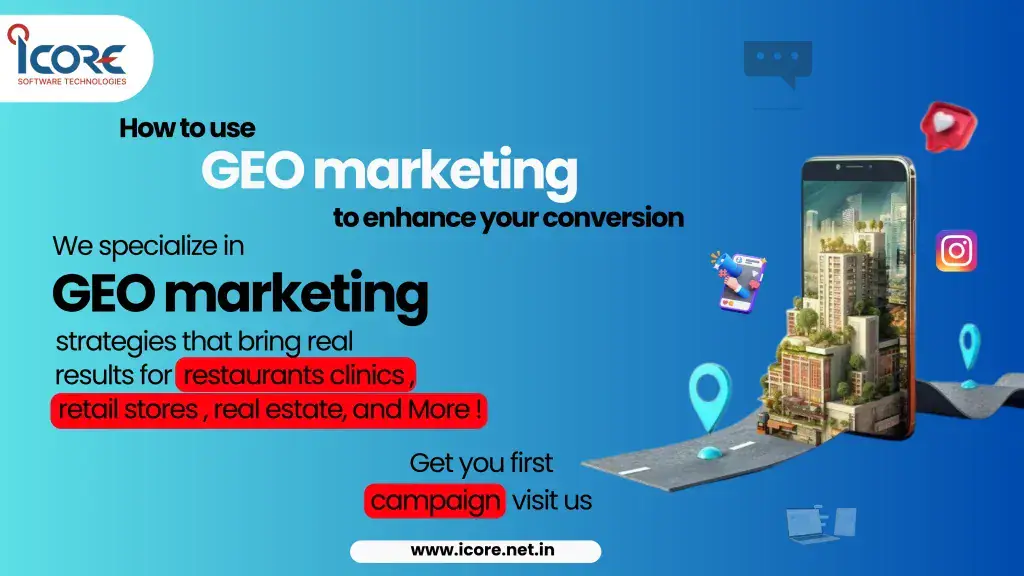
How to Use Geo Marketing to Enhance Your Conversions
How to Take Your Business Online Successfully in 2026
9 Mistakes Small Brands Make with Facebook Ads
Key Takeaways
- •Average Google Ads CPC sits around $2.96 across industries (up 12% year over year); average CPA runs $50-$80.
- •Average Google Ads conversion rate is around 7.52% overall, though ecommerce Search Ads average closer to 2.81%.
- •Display Ads convert far lower (around 0.57%) than Search Ads.
- •Rising CPCs make landing page quality as important as bidding strategy.
- •AI-driven automated bidding is now the baseline, not an edge case.
The Most Important PPC Trends for 2026 (And How to Stay Ahead)
Paid search isn't getting cheaper, and it isn't getting simpler. The average Google Ads CPC in India now sits around ₹24 for Search campaigns, but that average hides a huge spread — from ₹15-40 for e-commerce up to ₹250-460 for insurance and lending, with legal, finance, and B2B software often paying ₹200-380. Spending more to stand still isn't a strategy. This is what's actually changing in PPC this year, and what to do about each shift.
Key Takeaways
- Average Google Ads CPC in India runs around ₹24 for Search, but ranges from ₹15-40 (e-commerce) up to ₹250-460+ (insurance, lending, finance) depending on industry.
- A ₹30,000-50,000 monthly budget is a practical starting point for most small businesses running Search campaigns.
- Average Google Ads conversion rate across all campaign types is around 7.52%, though ecommerce Search Ads specifically average closer to 2.81%.
- Display Ads convert far lower (around 0.57%) than Search Ads, making them a poor default choice for direct-response campaigns without proper targeting.
- Rising CPCs mean campaigns with weak landing pages lose money faster than ever — the conversion side of the equation now matters as much as the bidding side.
- Automation and AI-driven bidding are no longer optional extras; manually managed campaigns increasingly compete at a structural cost disadvantage.
What "PPC Trends" Actually Means for a Business Owner
A trend only matters if it changes what you should actually do with your budget. The shifts below aren't abstract industry chatter — each one either raises your costs, changes how your ads get evaluated, or opens a channel worth testing. The goal here is to translate each trend into a specific action.
What It Looks Like When It's Working
Scenario: A Coimbatore-based B2B equipment supplier was running Search campaigns with a ₹3,800 average CPA and a 1.8% conversion rate — below the typical Search benchmark of 3-5%. After rebuilding their landing pages to match ad copy exactly (removing a generic homepage redirect) and shifting 30% of budget from broad match to phrase and exact match on their highest-intent terms, conversion rate rose to 4.6% and CPA dropped to ₹2,250 within six weeks, on the same daily budget.
Nothing about their bids or creative changed dramatically — the fix was matching ad intent to landing page content precisely, which is exactly where rising average CPCs make the biggest difference: every wasted click now costs meaningfully more than it did two years ago.
The PPC Trends That Matter Most in 2026
1. Rising CPCs make landing page quality non-negotiable
With average CPC up 12% year over year, a landing page that converts at half the achievable rate effectively doubles your real cost per acquisition. Match landing page headlines and offers directly to ad copy — generic homepage traffic from a specific ad rarely converts as well as a matched, dedicated page.
2. AI-driven automated bidding is now the baseline, not the edge
Smart Bidding strategies (Target CPA, Maximize Conversions) increasingly outperform manual bidding at scale, since they process far more real-time signals than a human manager can track. The trend isn't "should you automate" anymore — it's ensuring your conversion tracking is accurate enough to feed that automation good data.
3. First-party data is becoming the targeting backbone
As third-party cookie tracking keeps eroding, campaigns built on your own customer lists, CRM data, and on-site behavior signals (via Customer Match and similar tools) are outperforming broad interest-based targeting, which has gotten noisier and less precise.
4. Broad match plus Smart Bidding, done carefully
Google's own guidance increasingly pushes broad match paired with Smart Bidding, but this only works safely with strong negative keyword lists and tight budget monitoring — used carelessly, broad match is exactly where wasted spend accumulates fastest at 2026's higher CPCs.
5. Video and Performance Max are eating budget from traditional Search-only strategies
Google's Performance Max campaign type, which spans Search, Display, YouTube, and Discover from one campaign, is increasingly where incremental budget goes. It performs best with strong creative assets and clean conversion data feeding it — weak inputs produce weak results faster than in traditional Search campaigns.
6. Conversion rate optimization now pays back faster than bid optimization
At 2026's CPC levels, a 1-point conversion rate improvement often moves the needle on CPA more than a comparable bid adjustment. Given ecommerce Search Ads average only 2.81% conversion, most accounts have real room to close that gap before spending more.
Common Challenges and How to Overcome Them
"Our CPCs keep climbing and results aren't improving."
Check landing page conversion rate before touching bids. Rising CPC with flat conversion rate compounds into a much worse CPA than either factor alone — fixing the page usually costs less than fixing it through bidding.
"We tried automated bidding and it performed worse."
Automated bidding needs a data runway (typically 20-30 conversions in the recent lookback window) to learn properly. Judging it in week one, before it has enough signal, is the most common reason businesses abandon it prematurely.
"Broad match is burning through budget with poor-quality clicks."
This is a negative-keyword and Smart Bidding target problem, not a reason to abandon broad match entirely — tighten the negative list weekly for the first month and set a realistic Target CPA before scaling spend.
Where Smaller Businesses Have an Advantage
- Faster iteration on landing pages and ad copy without layers of internal approval.
- Tighter, more specific first-party customer data that's easier to activate for Customer Match targeting than a large company's fragmented data.
- Ability to focus budget entirely on a few high-intent campaigns rather than spreading thin across many product lines.
How PPC Connects with Other Marketing Strategies
PPC and SEO share keyword-intent data that makes both stronger: PPC reveals which terms actually convert before committing months to ranking for them organically, while a site's organic SEO health (page speed, mobile usability) directly affects Quality Score and therefore CPC. Landing pages built for paid campaigns often become the basis for stronger organic service pages too.
Best Practices for PPC in 2026
- Match every ad's landing page to its specific offer and keyword intent, not a generic homepage.
- Give Smart Bidding strategies a real data runway before judging performance.
- Build and maintain first-party audience lists as a core targeting asset, not an afterthought.
- Review negative keywords weekly for the first month of any broad-match campaign.
- Treat conversion rate optimization as equally important as bid management, not secondary to it.
FAQs
Is PPC still worth it with CPCs rising?
Yes, but the margin for error is smaller — landing page quality and conversion tracking accuracy matter more than ever at higher CPCs.
Should I switch entirely to automated bidding?
Most accounts benefit from Smart Bidding once they have enough conversion volume to feed it properly; very low-volume accounts may still need manual oversight longer.
What's a realistic PPC conversion rate to expect?
Roughly 3-5% for Search campaigns is a reasonable benchmark, though it varies significantly by industry and offer.
Is Performance Max worth trying for a small business?
It can work well with strong creative assets and clean conversion tracking already in place; without those, it tends to underperform a well-run Search-only campaign.
Conclusion
The PPC trends that matter in 2026 all point the same direction: rising costs mean every part of the funnel — targeting, bidding, and especially the landing page — has to work harder to justify the spend. Businesses that treat conversion rate optimization as seriously as bid management are the ones absorbing higher CPCs without losing ground.
If you want a second opinion on where your PPC budget is actually leaking, get in touch for a straightforward account review.
Share it with your colleagues and social network.